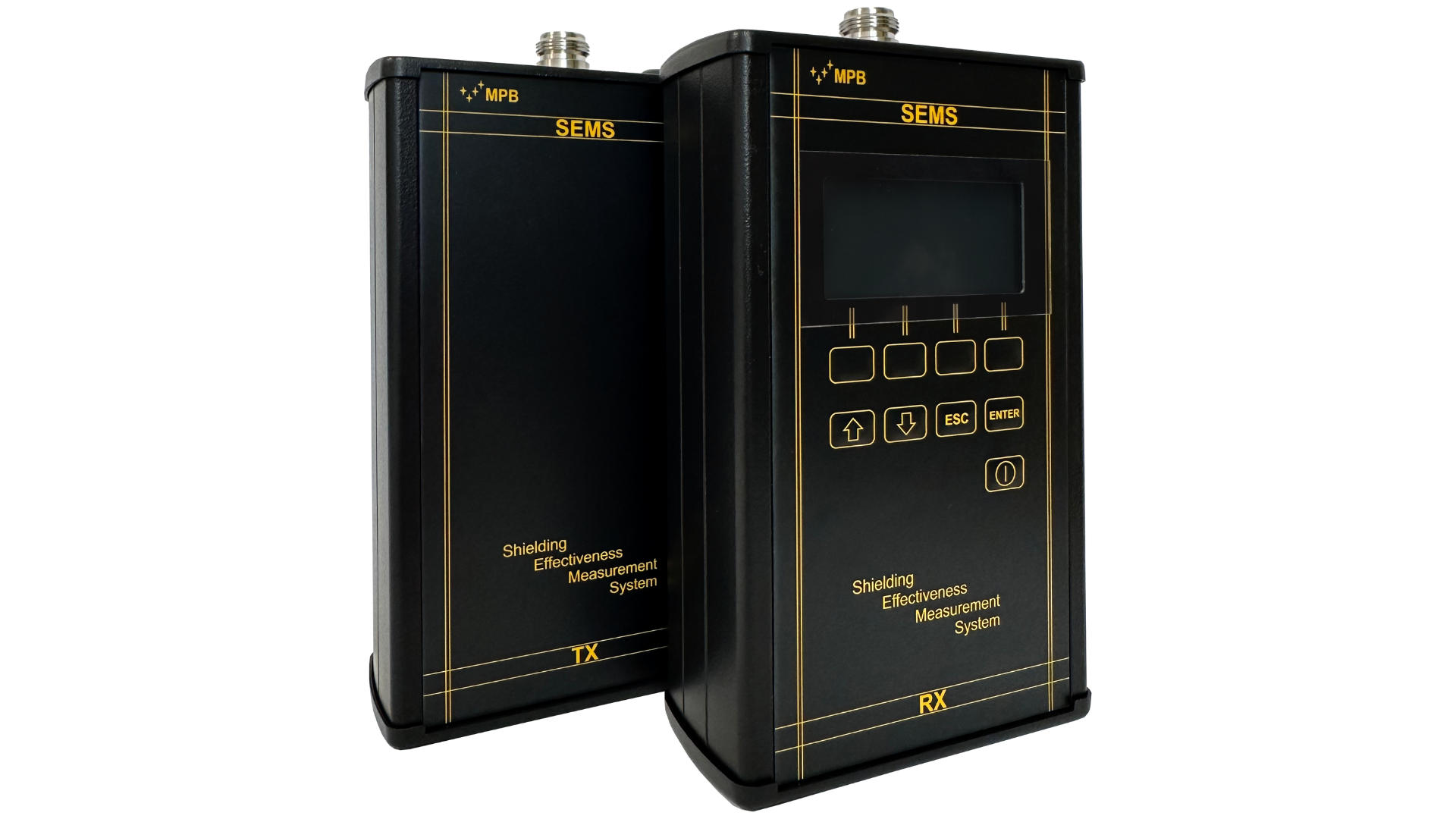
SEMS B – Shielding Effectiveness Measurement System
Category: RF Test
The SEMS B system has been specifically developed to meet the increasing global demand for reliable and accurate shielding effectiveness tests in shielded rooms, such as hospital MRI rooms, EMI/EMC chambers, military shelters and civil telecommunications cabins. Modern infrastructures require a high level of protection from external electromagnetic interference and, at the same time, strict control of emissions leaving the room. SEMS B addresses these needs by providing fast, automated and highly repeatable measurements of both electric and magnetic field attenuation.
System overview
SEMS B consists of two main units: a transmitting unit (TX) and a receiving unit (RX). Both units operate across the entire frequency range from 10 kHz to 300 MHz, enabling the evaluation of shielding performance over all the frequencies typically required by international standards. The measurement field to be tested is defined by the type of antenna used, and SEMS B supports a comprehensive antenna set to ensure full coverage of both magnetic and electric fields.
The following antennas are available:
• Two loop antennas for 10 kHz–4 MHz
• Two loop antennas for 2 MHz–128 MHz
• Two whip antennas for 1 MHz–128 MHz
• Two dipole D2 antennas for 40 MHz–300 MHz
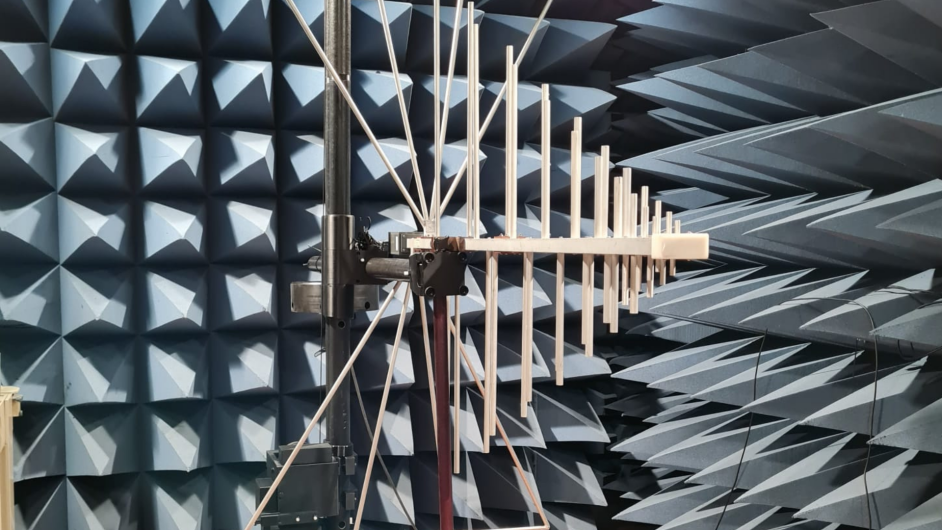
• Two biconical antennas for 60 MHz–300 MHz
Additionally, loop antennas are available in an active version, further expanding the system’s versatility.
Unlike conventional test systems, which perform measurements only at fixed or discrete frequencies, SEMS B executes a continuous scan across the entire frequency range, dramatically improving accuracy and providing complete visibility of potential shielding weaknesses. A key innovation introduced in SEMS B is the synchronization of TX and RX units via optical fiber, ensuring immunity from external interference, improving measurement consistency and minimizing human error. This feature allows the operator to automate the entire test procedure and obtain highly repeatable results even in complex or noisy environments.
Operating principle
The functional principle of SEMS B is based on a two-step measurement method:
Phase 1 – Zero Setting
The TX unit generates an RF signal, which is radiated into free space through the selected antenna. The RX unit is positioned at a predetermined and fixed distance, receiving the signal with a similar antenna. The received level is stored as the reference level.
Phase 2 – Measurement
The RX unit is then placed inside the shielded environment, maintaining the same distance from the TX unit as before. Because the shielded room attenuates the electromagnetic signal, the RX measures a reduced signal level. The system automatically calculates the shielding effectiveness by subtracting the two values and displays the attenuation directly in dB, without any manual intervention. This method ensures high repeatability and simplicity for the operator.
Receiver (RX) architecture
Inside the RX unit, the RF signal from the receiving antenna first passes through an attenuation module, which adjusts the level to the optimal range for the subsequent stages. Next, band-selecting filters route the signal according to the frequency being measured. The conditioned signal is then converted to digital form through a high-performance ADC. A powerful RSP and DSP process the data in real time using advanced algorithms to extract accurate amplitude values, which are then displayed to the user.
Transmitter (TX) architecture
The TX unit generates the required RF signal using a Direct Digital Synthesis (DDS) source, controlled by the CPU. The CPU receives commands from the RX unit through a wireless interface, ensuring full synchronization between the two units. The generated signal is divided and amplified to reach the required output power before being fed to the transmitting antenna.
Operating modes unconnected mode
In environments where Bluetooth or optical fiber communication cannot be used, SEMS B can operate in “unconnected mode.” The operator creates a frequency list using the SEMS B PC software and uploads it directly into the RX memory. Measurements can be performed offline in a quick and simple way.
Sniffer mode
Sniffer mode is designed for technicians who need to identify weak points in the shielding of a chamber. By scanning the environment, the operator can locate leakage points or structural imperfections that may compromise the shielding effectiveness.
Calibration with CalKit
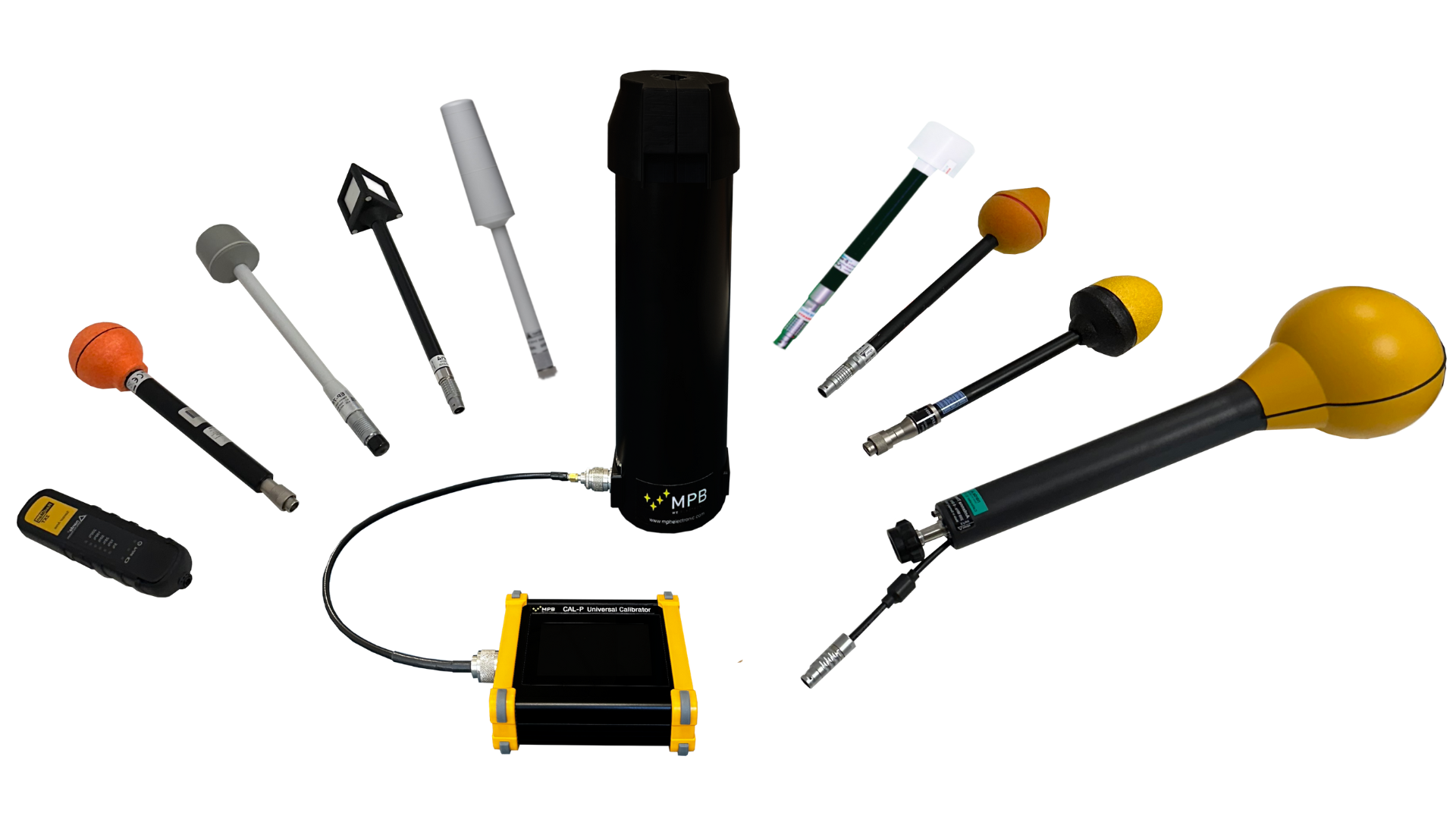
Although SEMS B does not measure absolute values, periodic verification of its linearity is essential. The system includes a dedicated CalKit, supplied with accredited calibration. The calibration procedure can be accessed directly from the RX menu. By selecting the CalKit option, the display guides the operator step-by-step through the procedure, ensuring correct execution and traceable results.
Power supply
Both TX and RX units are powered by rechargeable lithium-ion batteries. This ensures measurement independence from external power sources, eliminates ground loops and prevents unwanted interference from mains supply lines.
SEMS B Software utility
The SEMS B PC Utility software allows users to download, store and export all measurements recorded by the RX unit. Data can be exported in ASCII format, facilitating integration into customized test reports. The software also allows the creation of preprogrammed scans, including zero-setting procedures, which can be loaded into the RX’s non-volatile memory for automated operation.
SEMS B represents a modern, efficient and comprehensive solution for evaluating the shielding effectiveness of any type of shielded enclosure. With its continuous scanning capability, advanced synchronization, wide antenna support and powerful software tools, it is the ideal instrument for laboratories, hospitals, manufacturers and field technicians requiring precise and reliable EMF, EMC and RF shielding assessment.