

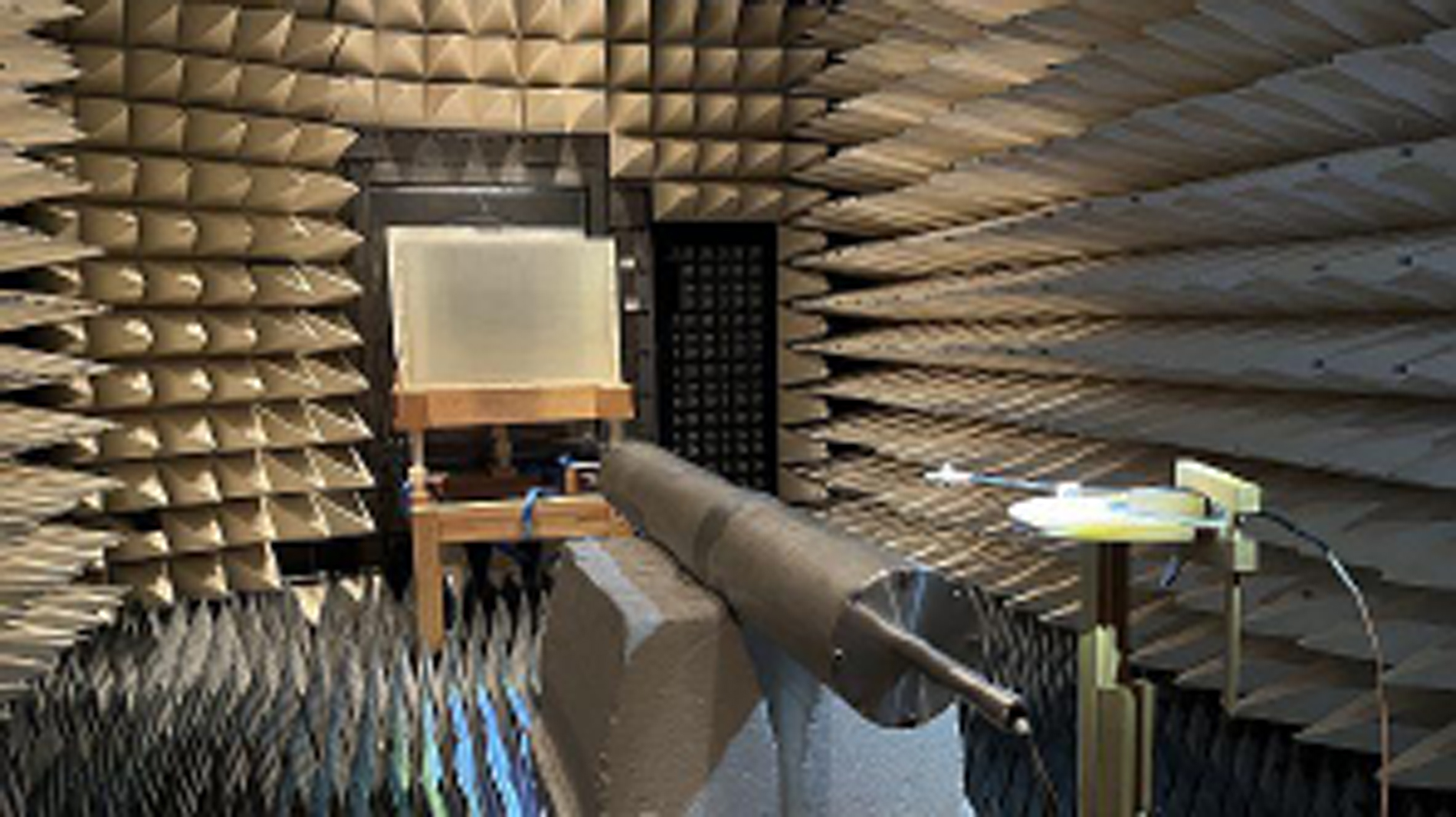
This whitepaper compares different HPEM environments and analyzes their coupling behavior in a shielded electronic system using experimental immunity tests and numerical field simulations. It also provides a detailed examination of the relationships between signal waveform, frequency spectrum, enclosure properties and the resulting electromagnetic effects.
The presented measurement results and simulations provide a solid basis for the assessment of electromagnetic risks and the development of robust protection concepts for shielded electronic systems.
Chapter overview
- Significance of High-Power Electromagnetic Environments (HPEM)
- Relevance of electromagnetic immunity for critical infrastructures
- Differences between conventional EMC and HPEM threats
- Classification of the Nuclear Electromagnetic Pulse (NEMP) as a reference scenario
- Overview of Different HPEM Signal Types
- Design of the Investigated Test System
- Results of the Immunity Investigations
- Numerical Verification of the Measurement Results
- Key Findings for Practical Applications
This paper is only available in German.
Authors
Dr.-Ing. Sven Fisahn,
Bundeswehr Research Institute for Protective Technologies and CBRN Protection (WIS), Munster, Germany
Dr.-Ing. Sven Fisahn specializes in the analysis of electromagnetic threats, immunity investigations, and protection concepts for electronic systems and critical infrastructures.
Prof. Dr.-Ing. Heyno Garbe,
Emeritus Professor, Leibniz University Hannover, Germany
and Chair of the EMV Congress Scientific Committee
Prof. Dr.-Ing. Heyno Garbe is one of the leading figures in the field of Electromagnetic Compatibility (EMC) in the German-speaking community. As Emeritus Professor at Leibniz University Hannover and Chair of the EMV Congress Scientific Committee, he continues to contribute to the advancement of EMC research and knowledge exchange. His areas of expertise include EMC, electromagnetic field theory, coupling mechanisms, and numerical simulation methods.
Further Links:
To the EMV expo 2027
To the EMV workshops 2027
Note: The full paper is part of the official EMV 2026 conference proceedings.